
Indian firm Bharat Forge and US defence major Pratt & Whitney Canada have announced a collaboration to support the development of India's high-altitude, long-endurance (HALE) unmanned aerial vehicle. This partnership involves integrating advanced turboprop engines into a DRDO-designed UAV, bolstering India's indigenous defence capabilities under the Aatmanirbhar Bharat initiative.

Defence Minister Rajnath Singh advised students at Babu Banarasi Das University to not be confined by their academic degrees, encouraging them to follow their interests and adapt to emerging technologies like AI. He emphasised the importance of skills over qualifications, drawing examples from successful individuals who ventured beyond their initial fields. Singh also touched upon spirituality, India's cultural heritage, and the true essence of politics, urging students to contribute to national progress and secure borders.

The move is meant to enhance the operational capability of the armed forces, reduce import dependence and increase domestic value addition.

Chief Justice of India Surya Kant has called upon the Commonwealth Legal Education Association (CLEA) to develop model guidelines for disclosing AI assistance in legal research. He also stressed the importance of mandatory legal aid work for students and cautioned against relying solely on AI detection software for academic misconduct. The CJI highlighted the need for responsible AI use, evolving assessment methods, and uniform citation standards across the Commonwealth.

India aims to become a globally competitive and technologically self-reliant semiconductor powerhouse by 2047, leading in next-generation chip technologies. This vision, highlighted at the ESTIC 2026 conclave where DRDO played a key role, focuses on developing a sustainable semiconductor ecosystem, creating high-value jobs, and ensuring digital security and economic strength through indigenous chip capabilities.

Defence experts said the capability of Bagheera has to be tested and validated under India's harsh conditions during summer months in deserts. But it assumes significance as the ability to destroy an enemy tank before it enters striking distance could prove decisive in future land battles.

The Defence Research & Development Organisation (DRDO) has dismissed recent media reports of an alleged cybersecurity incident and data breach as "incorrect and unverified." Officials clarified that investigations found no evidence of an active cyber attack or data exfiltration, stating that any leaked data is unclassified, outdated, and fabricated by threat actors for financial gain.

A retired Indian Army captain, Babu P, has been arrested in Vellore for allegedly leaking confidential military secrets to an unidentified woman via WhatsApp. The woman reportedly posed as a DRDO project worker and engaged in personal conversations to extract sensitive information.

Built as an expendable, short-duration turbojet engine for single-mission applications, it can power tactical cruise missiles, anti-ship missiles, and long-range loitering munitions.

Specialised range taking shape in Andhra Pradesh, while West Bengal clears way for DRDO's new testing facility.
An Indian firm, Bharat Forge, and US defence major Pratt & Whitney Canada have announced a collaboration to develop India's high-altitude, long-endurance (HALE) unmanned aerial vehicle (UAV). This partnership will focus on integrating advanced turboprop engines into the DRDO-designed HALE UAV, bolstering India's indigenous defence capabilities under the Aatmanirbhar Bharat initiative. The collaboration aims to enhance India's strategic self-reliance in surveillance and reconnaissance technology.

We must seize the opportunity provided by the COVID-19 crisis to kick-start indigenous research efforts, recommends Colonel Anil A Athale (retd).

Defence Minister Rajnath Singh has called for India to become a global leader in advanced technologies, particularly in strengthening its non-destructive testing (NDT) ecosystem. He emphasised the need for indigenous capabilities, consistent quality assurance, and the integration of advanced digital technologies like AI and ML to ensure reliability and self-reliance in defence applications.
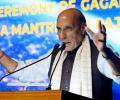
Defence Minister Rajnath Singh has urged India to become a global leader in advanced technologies, particularly in non-destructive testing (NDT), to bolster self-reliance and defence preparedness. He highlighted the critical need for indigenous capabilities in inspection technologies, quality assurance, and reliable testing results for strategic applications, emphasising that NDT is vital for ensuring the integrity of defence systems without causing damage.
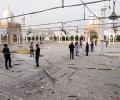
'The close collaboration between Pakistan and China, and the assistance Pakistan receives, is a factor in our planning, and the IAF is building its capacity to counter precisely such collusive threats.'

16-year-old Dhinidhi Desinghu secured India's first-ever swimming medal at the Youth Olympics in Dakar, winning bronze in the women's 100m freestyle. Despite her personal disappointment at not achieving her time goal or winning gold, she acknowledges the immense pride in her historic achievement for Indian swimming, a sport with low visibility, especially for women. She also discusses the greater pressure she felt at the Youth Olympics compared to her Paris Olympics experience.
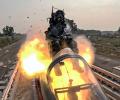
On Tuesday, December 2, 2025, the Defence Research and Development Organisation successfully conducted a high-speed rocket-sled test of a fighter aircraft escape system at the Rail Track Rocket Sled facility at the Terminal Ballistics Research Laboratory in Chandigarh.

The Defence Research and Development Organisation (DRDO) and the Indian Air Force (IAF) have successfully conducted flight tests of the RudraM-II air-to-surface missile, marking a significant milestone in indigenous defence technology.

The $6.3 billion Binance heist has renewed concerns over nation-State cyberattacks and AI-driven vulnerabilities, putting the security preparedness of crypto exchanges under scrutiny.

Successful interceptor, anti-ship, MIRV and hypersonic technology tests have strengthened India's position among a select group of advanced missile powers.

Seven of the top 10 best-performing Indian smallcap stocks over the past year, linked to the US data centre boom and AI infrastructure, are now facing a valuation test as enthusiasm for AI investment shows signs of cooling on Wall Street. Analysts warn that the rally in these Indian counterparts may have left valuations increasingly stretched, with any pullback in US capital expenditure potentially weighing on their share prices.

India has successfully conducted the maiden salvo launch of the indigenously developed Naval Anti-Ship Missile-Short Range.
IBM Chairman and CEO Arvind Krishna details the company's substantial annual investment in India and its global USD 10 billion commitment to quantum computing over the next five years. He addresses the potential for AI to displace 10-20 per cent of jobs, particularly in the BPO sector, while also highlighting India's significant opportunity in the AI ecosystem. Krishna urges India to accelerate AI adoption, scale existing tech initiatives, and build its semiconductor manufacturing, advocating for a light-touch approach to AI regulation and emphasizing critical thinking in an AI-driven economy.

As remarkable as DRDO's contribution in containing and treating COVID-19 has been, its success over the last 15 months has been in its primary role of developing conventional defence equipment and technologies.

India has successfully conducted the first flight trial of its indigenously developed Tactical Advanced Range Augmentation (TARA) glide weapon system off the coast of Odisha, marking a significant step in enhancing its defence capabilities.

Ashok Thombre, international business advisor at The Quantico, shortlists some of the most popular government competitive exams in India that attract thousands of aspirants every year.
The Central Industrial Security Force (CISF) has signed an MoU with the Drone Federation of India (DFI) to enhance its counter-drone capabilities. This partnership aims to strengthen security at vital installations like airports, nuclear facilities, and oil refineries by fostering engagement with Indian drone startups and technology companies for capacity building, research, and operational readiness against aerial threats.

The Defence Research and Development Organisation (DRDO) has successfully test-fired a drone-launched precision guided missile at a test range in Andhra Pradesh. Defence Minister Rajnath Singh announced the successful flight trials in Kurnool.

India has successfully conducted maiden flight tests of an integrated air defence weapon system (IADWS) off the coast of Odisha. The system includes quick reaction surface-to-air missiles, very short range air defence system (VSHORADS) missiles, and a high power laser based directed energy weapons (DEW) system.

Andhra Pradesh is set to inaugurate India's first indigenously developed, open-access quantum computer test beds, Amaravati 1S and 1Q, at SRM University, marking a significant advancement in the nation's quantum computing capabilities.
The Bombay High Court has denied bail to retired DRDO scientist Pradeep Kurulkar, arrested for allegedly sharing sensitive information with a Pakistani intelligence operative, citing the passing of vital information during intimate chats and the potential to influence witnesses.

India successfully test-fired two Pralay missiles in quick succession off the coast of Odisha, paving the way for its induction into the military. The missile is indigenously developed and features a state-of-the-art navigation system.
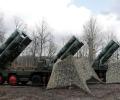
In Operation Sindoor, Pakistan had deployed additional squadrons of the Chinese-origin HQ-9 air defence systems, which could not do much against the Indian aircraft when they brought down multiple terror targets inside Pakistan.

Three milestones in three days signal India's growing mastery in next-generation strategic technologies spanning nuclear deterrence, hypersonic propulsion and precision stand-off strike capability.

'DRDO has been directed to license missile technologies to the private sector.'

The Supreme Court has agreed to hear a plea from Uttar Pradesh police challenging a Bombay High Court ruling that absolved BrahMos Aerospace engineer Nishant Agarwal of major espionage charges under the Official Secrets Act. Agarwal was previously sentenced to life imprisonment by a Nagpur district court for spying for Pakistan's ISI, despite the High Court finding he only illegally stored sensitive data.

The Armoured Corps Centre and School and Mechanised Infantry Centre and School traces its lineage back more than two centuries, evolving from early cavalry regiments into a modern force comprising 67 armoured regiments, including the President's Bodyguard. The centre showcased the operational capabilities of manoeuvre warfare platforms of the Indian Mechanised Forces during the Integrated Fire Power & Manoeuvre Exercise: 2026 held at the Kharjuna Khare Ranges in Ahilyanagar (formerly Ahmednagar), Maharashtra, on January 20, 2026.
The Indian Air Force (IAF) demonstrated 'Vayu UTtaM', an indigenously developed multi-mode Unmanned Traffic Management (UTM) system, at 'Dronathon 2026' in Pokhran. This ground-based system is designed to manage drone operations in congested airspace and identify rogue drones, with applications extending to critical infrastructure, civil aviation, and public safety. The event also saw the release of the 'IAF UAS Roadmap' to guide indigenous innovation in unmanned systems.

A lesson for India is to clearly define objectives beforehand, so that the adversary or other parties do not attempt to mitigate them midway.

India has successfully conducted a flight test of an advanced Agni missile featuring Multiple Independently Targetable Re-entry Vehicle (MIRV) technology off the coast of Odisha.
